Atrial Septal Defect (ASD)
Surgical correction of congenital heart defects for a healthier, stronger heart.
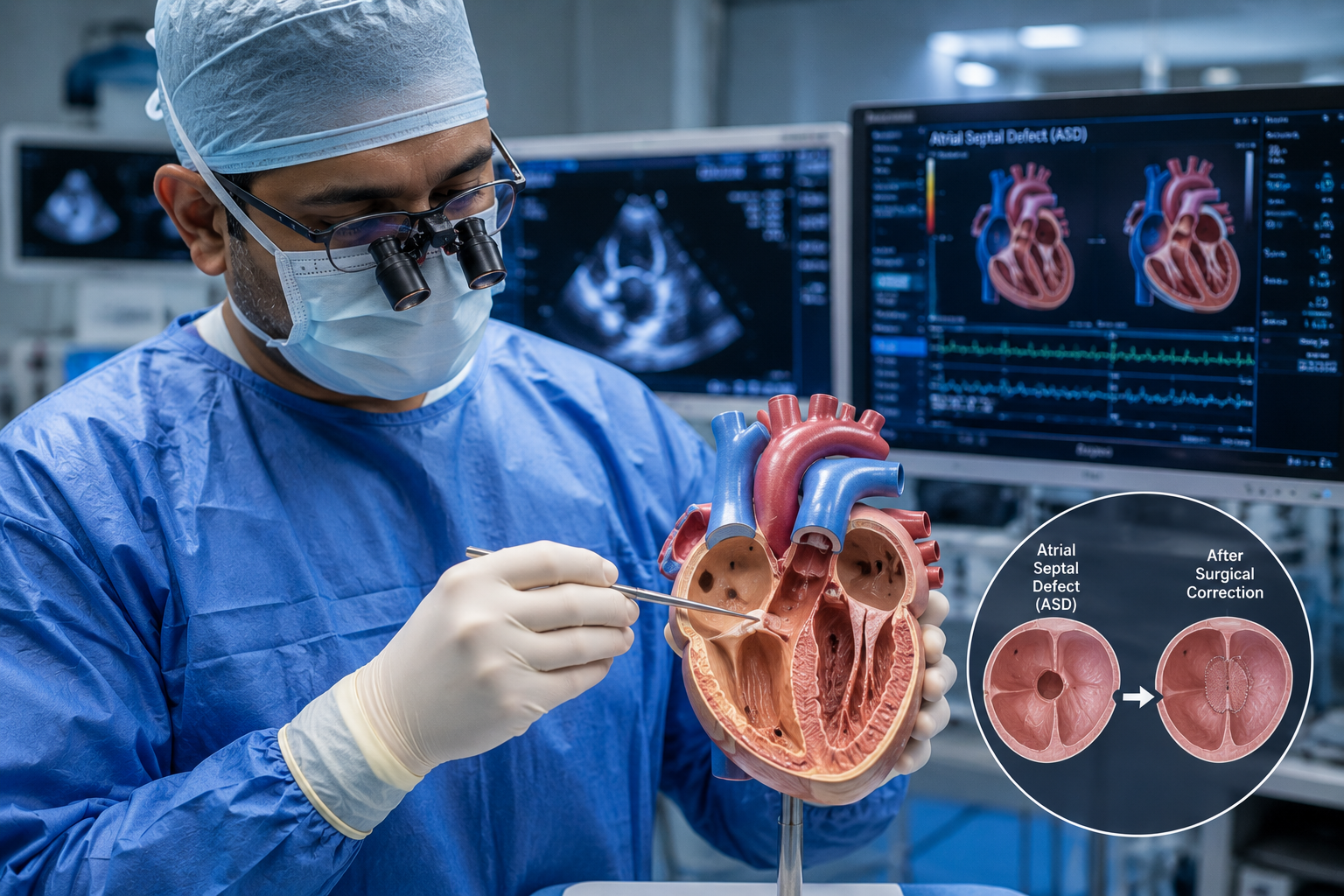
Correcting Atrial Septal Defects (ASD)
An Atrial Septal Defect (ASD) is a congenital structural abnormality characterized by an opening in the septum between the heart's upper chambers. This "hole in the heart" leads to inefficient blood oxygenation and increased pulmonary pressure. Dr. Chintan Mehta specializes in the precise surgical closure of ASDs to restore normal hemodynamics and prevent future heart failure.
Recognizing Symptoms of ASD
Small ASDs may never cause problems. However, larger defects require closure if the patient experiences:
- Frequent lung infections
- Shortness of breath during exercise
- Heart murmurs or palpitations
- Stroke or paradoxical embolism
Surgical Approach
While some ASDs are closed via catheters, larger or more complex defects require surgical repair. Dr. Mehta performs Surgical Patch Repair, using either the patient's own tissue or a specialized medical-grade patch to permanently seal the hole. This ensures that the heart chambers return to their normal size and function.
Key Benefits
Prevents Heart Failure
Stops the chronic overworking of the right side of the heart, preventing future enlargement.
Reduces Stroke Risk
Closes the pathway that allows blood clots to travel directly to the brain.
Recovery & Follow-up
Surgical closure of an ASD has a very high success rate and a relatively quick recovery. Most patients stay in the hospital for 3-5 days. Long-term follow-up involves periodic echocardiograms to ensure the patch remains secure and heart pressures have normalized. Most patients return to full activity within a month.
Compassionate Congenital Care
Dr. Mehta understands the anxiety surrounding congenital heart issues. His patient-first approach ensures clear communication and a gentle recovery process for patients of all ages.